
Aortoiliac Occlusive Disease
Learn about the blockages in the aorta and iliac arteries that define this disease.
WHAT IS AORTOILIAC OCCLUSIVE DISEASE?
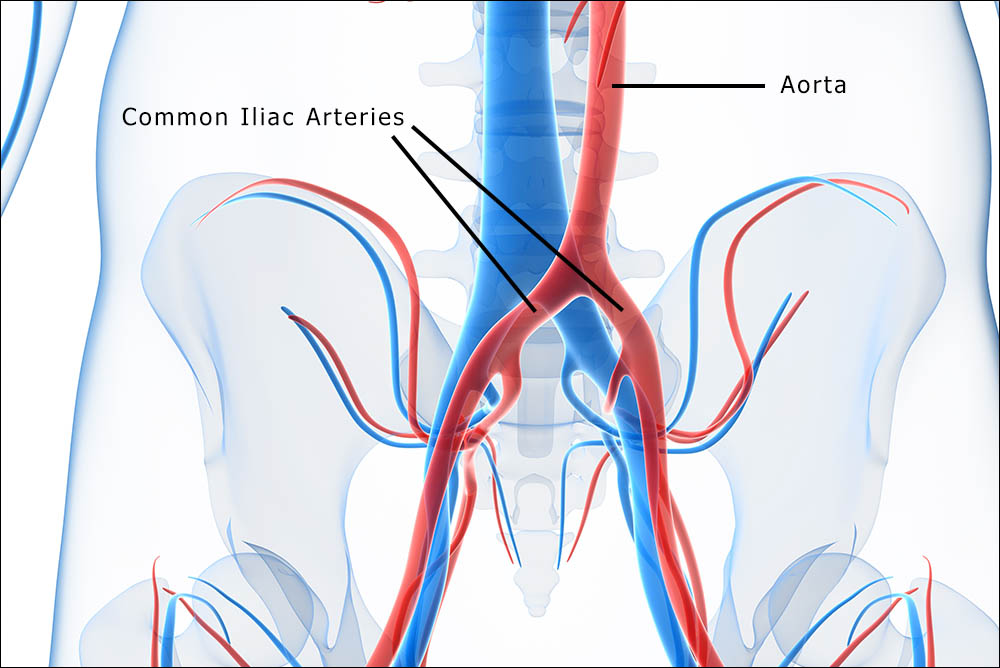
Aortoiliac occlusive disease is a condition where there is a blockage in the primary blood vessel of the body (aorta) or the iliac arteries. Around the belly button, the aorta branches into the iliac arteries which supply blood to the legs, organs, and pelvis. Blockages in the aorta or iliac arteries are caused by the accumulation of plaque, fatty deposits, calcium, or other substances of the blood on the interior walls of the arteries. Aortoiliac occlusive disease is a type of Peripheral Artery Disease (PAD).
CAUSES FOR AORTOILIAC OCCLUSIVE DISEASE
Atherosclerosis, or a hardening of the arteries, is a leading cause for aortoiliac occlusive disease. However, there are other potential causes. Certain inflammatory conditions such as Takayasu’s Arteritis can cause the arteries to block. Additionally, if you have ever received radiation to the pelvic region it can cause arterial wall inflammation which may then lead to blockages inside the aorta or iliac arteries.
RISK FACTORS & SYMPTOMS
The risk factors and symptoms of aortoiliac occlusive disease are essentially the ones we would identify for atherosclerosis.
Some common risk factors associated with atherosclerosis include:
- Smoking
- Diabetes
- Obesity or overweight
- High blood pressure
- High Cholesterol
- Poor dietary habits
- Lack of exercise or sedentary lifestyle
- Family history of vascular disease/heart disease
Common symptoms associated with atherosclerosis include:
- Erectile dysfunction
- Fatigue, pain, or cramping while walking
- Resting pain in the feet or toes
- Legs feel cold or numb
- Ulcers on the legs and feet that heal slowly or not at all
- Gangrene on the feet / tissue loss
It is also important to note that in some cases there may be no visible or physical symptoms. However, if you or family members have a history of vascular disease and you begin to see or feel any of the symptoms listed above, do not ignore them! You need to be evaluated by a vascular surgeon like Dr. Tahara immediately.
EVALUATIONS AND TESTING
- Physical Examination
- Ankle Brachial Index (ABI) Test
- Duplex Ultrasound – usually required
- Advanced Imaging Tests – CT Angiogram, MRI Angiogram, Invasive Contrast*
* These tests are not always needed and will be determined on a case-by-case basis.
ALL THINGS VASCULAR
Copyright © 2022 - Allegheny Vein & Vascular. All rights reserved.