Carotid Artery Disease
Learn about carotid artery disease, risks, and symptoms.
WHAT IS CAROTID ARTERY DISEASE?
CAROTID ARTERY DISEASE AND STROKE
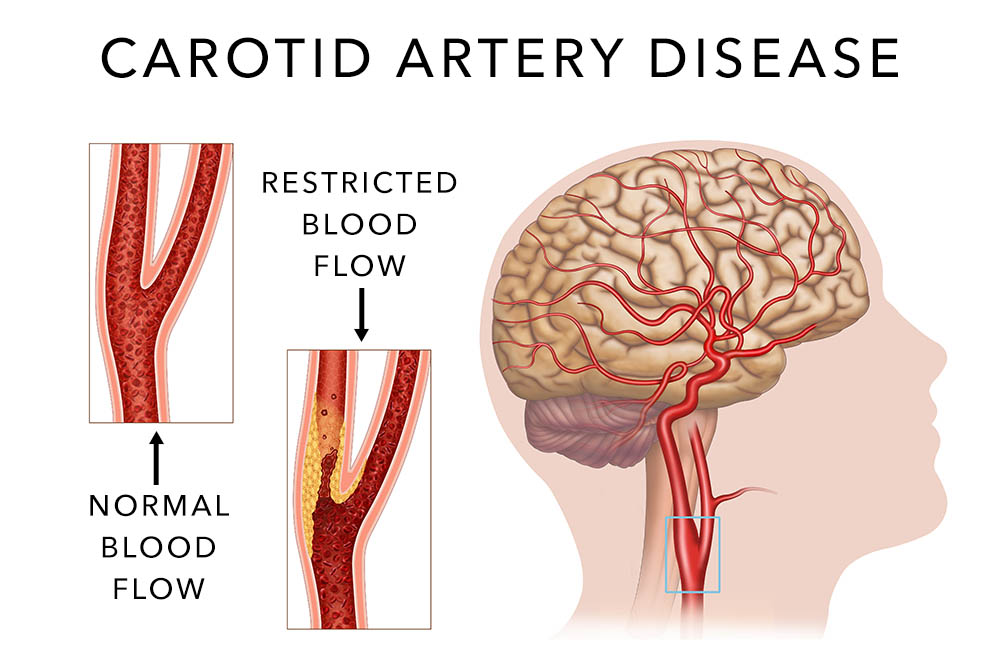
As large plaques rupture, the ulcerated surface of the plaque becomes the perfect breeding ground for blood clots. These clots, known as emboli, can become dislodged and enter the blood stream going to the brain. Once in the brain, the clot travels to ever smaller vessels until it eventually lodges in one, cutting off blood flow to the brain from that point on. Smaller clots will lodge in smaller arteries, causing less damage or even transient ischemic attack (TIA). Larger clots will lodge in larger arteries, causing even more damage to the brain.
The first sign that you have carotid artery disease unfortunately could be having a stroke or a TIA. The difference between a TIA and a stroke, is that TIA symptoms are typically not permanent and resolve within 24 hours. TIA symptoms are a very serious warning that a stroke may occur or could be imminent. Stroke symptoms are because the affected brain tissue has actually died and are longer lasting and in some cases unfortunately permanent.
SYMPTOMS & RISK FACTORS OF STROKE
Symptoms associated with stroke may include:
- Numbness or weakness in the face or limbs, often on only one side of the body
- One-sided facial drooping
- Slurred speech, or trouble talking or comprehending speech
- Difficulty seeing in one or both eyes
- In the case of TIA, you could experience what appears to be a shade coming down over one eye, which eventually lifts (amorosis fugax)
- Sudden dizziness or lack of balance
- Onset of severe headaches with no readily identifiable triggers
- Ringing in the ears or fainting (rare)
Some common risk factors associated with stroke include:
- Smoking or nicotine use
- Diabetes
- Obesity or overweight
- High blood pressure and high cholesterol
- Poor dietary habits
- Lack of exercise or sedentary lifestyle
- Family history of atherosclerosis or coronary artery disease
- Advanced age
DIAGNOSING CAROTID ARTERY DISEASE
- Vascular screening ultrasounds – while not a diagnostic tool per se screening ultrasounds can be important for evaluating presence of plaque and prompting more complete evaluation in selected patients
- Physical evaluation by a vascular surgeon
- Duplex ultrasound
- Imaging tests – CTA, MRA, Angiogram
TREATING CAROTID ARTERY DISEASE
Smoking cessation
Surgery such as carotid endarterectomy (CEA) -or- in selected cases carotid angioplasty and/stenting (CAS)