Mesenteric Ischemia
Mesenteric ischemia is a serious condition requiring immediate medical treatment.
WHAT IS MESENTERIC ISCHEMIA?
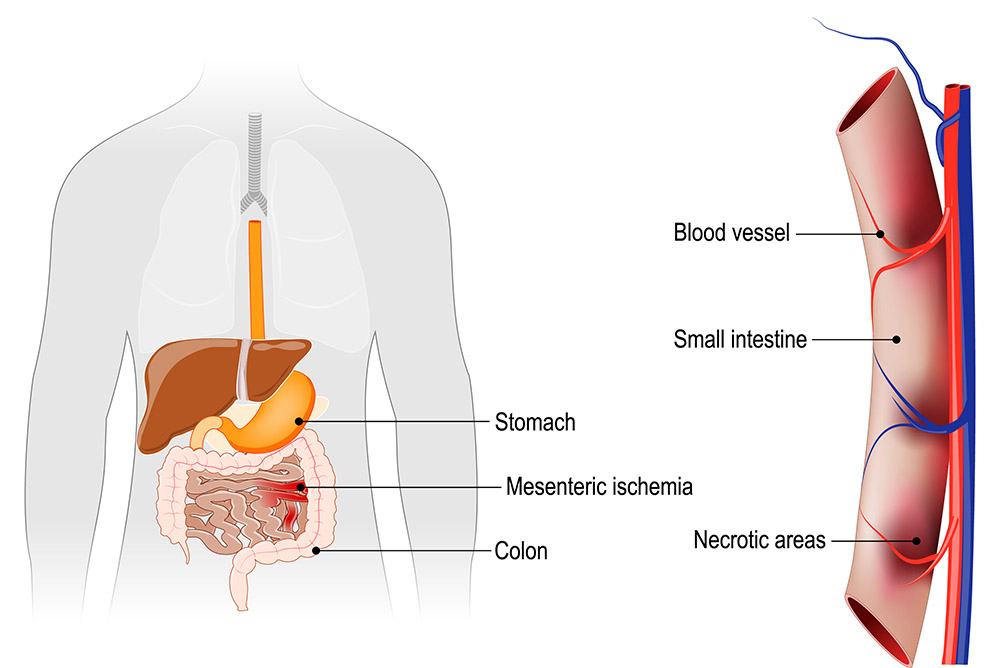
Mesenteric ischemia can be either acute or chronic. With acute mesenteric ischemia, symptoms may develop rapidly and require emergency surgery or intervention. In the case of chronic mesenteric ischemia, symptoms manifest gradually over time but may develop into an acute condition without warning.
The most common form of visceral artery disease is chronic mesenteric ischemia (insufficient blood flow to the large and small intestines). If this condition progresses too far without being checked, intestinal tissues may become gangrenous and even die from the lack of blood flow.
MESENTERIC ISCHEMIA RISK FACTORS / SYMPTOMS
There are a number of risk factors for mesenteric ischemia, including:
- If you are a smoker
- Individuals over 60 years of age are at greater risk
- If you are overweight or obese
- If you have high blood pressure or high cholesterol
- If you have a family history coronary heart disease
Common symptoms associated with mesenteric ischemia include:
- Severe stomach pain within an hour of eating, often accompanied by nausea or vomiting
- Weight loss — often patients will eat less as a direct response to the pain
- Diarrhea, flatulence, and/or constipation
If you begin to experience any of the symptoms above, DO NOT WAIT to be evaluated by a vascular surgeon or vascular specialist! Ischemic conditions require immediate medical attention and Dr. Tahara can help you.
EXAMS AND TESTS NEEDED
- Evaluation
- Blood tests
- Doppler ultrasound
- CT angiogram (CTA)
- Magnetic Resonance Angiogram (MRA)
- Angiogram
TREATING MESENTERIC ISCHEMIA
- Endovascular treatments — Balloon angioplasty / stenting
- Trans-aortic Endarterectomy