Vasculitis
Learn about types, causes, and symptoms of vasculitis.
WHAT IS VASCULITIS?
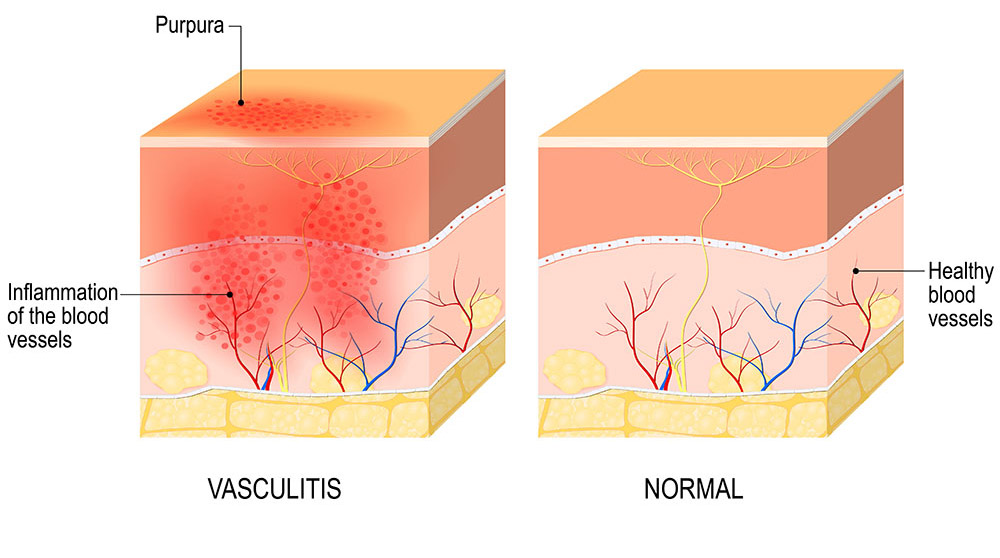
Vasculitis can cause a narrowing or even complete blockage of blood vessels. Inflammation can also weaken the vessel wall and can eventually lead to bleeding or developing an aneurysm. If the narrowing becomes severe or the vessel completely occludes, then the organ or structure supplied by that particular blood vessel does not get enough oxygen (ischemia) – this can lead to damage or a loss of function. In some cases the complications of vasculitis may even prove to be fatal.
TYPES AND SYMPTOMS OF VASCULITIS
The signs and symptoms common to most vasculitis types would include things like fever, headache pain, fatigue, weight loss, non-specific aches and pains, rashes, night sweats, numbness or weakness, and various nerve problems.
Below is a more comprehensive list of vasculitis types, paired with their usual symptoms:
- Behcet’s Disease – causes inflammation of veins and arteries. Patients may experience mouth and genital ulcers, eye inflammation, or skin lesions similar to acne.
- Buerger’s Disease – causes inflammation and clotting, and eventually obliteration of the smallest terminal blood vessels of the hands and feet and less commonly the ears, nose, and genitalia. Symptoms include pain, discoloration, ulceration, and gangrene. While rare, this disease may also affect blood vessels in the abdomen, brain, and heart.
- Churg-Strauss Syndrome – a rare condition that affects the lungs, kidneys, heart, skin and nerves in the extremities. Signs and symptoms tend to vary but may include asthma, skin changes, nerve pain and allergies.
- Cryoglobulinemia – caused by abnormal proteins in the blood. Patients may experience rash, joint discomfort, weakness, or numbness.
- Giant Cell (Temporal) Arteritis – caused by an inflammation of arteries in the head, particularly those in the region of the temples. Signs and symptoms include headache pain, jaw pain, tender scalp, blurry vision, or even blindness.
- Granulomatosis with Polyangiitis – results from inflammation of the blood vessels in the nose, sinus cavity, throat, lungs and kidneys. Patients may experience stuffy nose, sinus infections, nosebleeds, and sometimes coughing up blood. Most patients only experience these symptoms with advanced damage.
- Henoch-Schonlein Purpura – common to children but can happen in adults. Caused by inflammation of capillaries in the skin, joints, bowel, and kidneys. Patients may experience symptoms like abdominal pain, blood in the urine, painful joints, and rashes on the buttocks or legs.
- Hypersensitivity Vasculitis – often caused by an infection or medicine toxicity (drug reactions). Patients often report red spots on the skin, mostly on the lower legs.
- Kawasaki Disease – can affect children below the age of 5 years. Fever, rash, and eye redness are common symptoms of the disease.
- Microscopic Polyangiitis – This form of vasculitis affects small blood vessels, usually those in the kidneys, lungs or nerves. You may develop abdominal pain and a rash, fever, muscle pain and weight loss. If the lungs are affected, you may cough up blood.
- Polyarteritis Nodosa – this type of vasculitis may include many types of symptoms including rashes, weight loss, pain and/or weakness in muscles and joints, abdominal pain after eating, high blood pressure, and possibly kidney problems. Polyarteritis Nodosa affects the intestines, kidneys, nerves and skin.
- Takayasu’s Arteritis – affects larger arteries, and often the aorta. Patients may experience joint pain, weak pulse, high blood pressure, night sweats, fever, loss of appetite, frequent headaches and problems seeing.
DIAGNOSING VASCULITIS
- Physical Examination
- CTA or MRA
- X-rays
- Duplex Ultrasound
- Blood and urine tests
- PET Scan
- Biopsy
TREATING VASCULITIS
Vasculitis may be treated in the following ways:
- Medications
- Lifestyle changes
- Surgery