
Stasis Dermatitis
Learn about types, causes, and symptoms of stasis dermatitis.
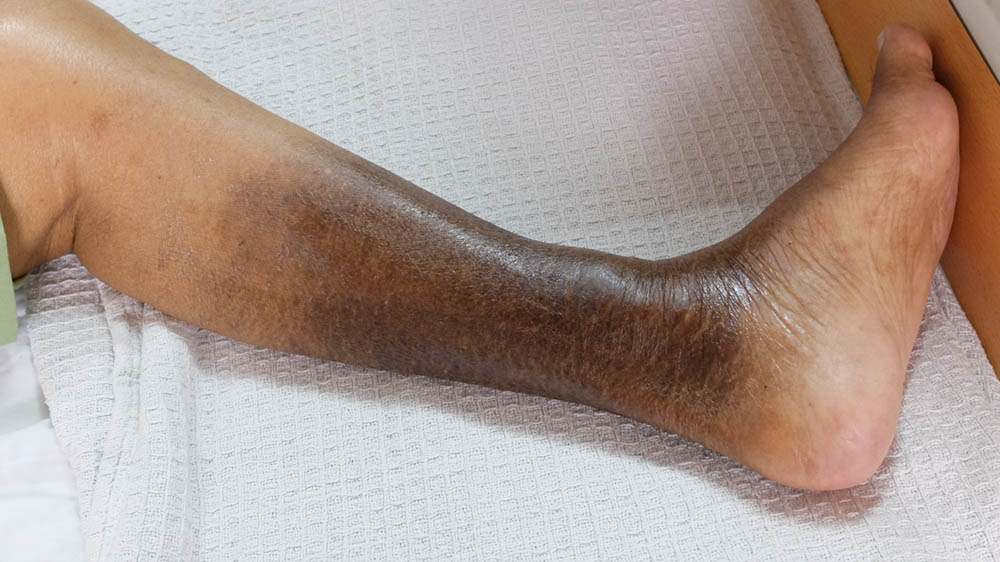
WHAT IS STASIS DERMATITIS?
Stasis dermatitis (also called gravitational dermatitis, venous eczema, and venous stasis dermatitis) is a condition characterized by problems with circulation in the veins, generally in the lower legs. These problem occurs when veins cause pressure to build up as the blood tries to flow upward through the body and towards the heart. The pressure increase can cause blood to leak out of the veins and into the skin. Blood can pool in the veins and the skin on the lower legs is starved of oxygen due to the reduced blood flow.
Stasis dermatitis tends to affect people with circulation problems. If the veins in your legs are not functioning optimally, blood may not be returning to the heart as efficiently as it should. The veins in your legs have one-way valves that assist with normal blood flow by pushing the blood upward. However, age and other factors can negatively impact valve function in the veins and can lead to venous insufficiency.
SYMPTOMS OF STASIS DERMATITIS
There are a number of typical symptoms associated with stasis dermatitis, including:
- Swelling around the ankles which may subside when sleeping but returns when active
- Discoloration to the skin around and above the ankles (often yellowed, brownish, or reddish in color)
- Veins that twist and bulge (varicose veins) and appear dark blue or purple
- Pain and itching
- Sores that weep and become scaly or flaky
- Skin around the ankles or shins may thicken
- Loss of hair on the skin around the ankles/shins
STASIS DERMATITIS: RISK FACTORS
There are a handful of conditions that may increase the risk for developing stasis dermatitis, including:
- Individuals who are 50 years or older
- High blood pressure
- The presence of varicose veins
- Being obese or overweight
- Having a history of congestive heart failure or other heart conditions
- Kidney failure
- Blood clots
- If you’ve had surgery or trauma to the area in question
- Multiple pregnancies — the condition is more frequent in women, in general
DIAGNOSING STASIS DERMATITIS
The exams and tests that are typically used to diagnose stasis dermatitis are:
- Physical Examination
- CTA or MRA
- X-rays
- Duplex Ultrasound
- Blood and urine tests
- PET Scan
- Biopsy
TREATING STASIS DERMATITIS
Treating stasis dermatitis is about improving circulation in the affected areas. In some cases, Dr. Tahara may suggest surgery to repair the veins if the stasis dermatitis condition is advanced. However, there are times when it is not necessary and other times when it is not an option. There are a number of ways that can help restore blood flow to and through the affected areas.
Typical treatment protocols for stasis dermatitis include:
- Compression stockings to reduce swelling and improve blood flow
- Periodically elevating the feet above the heart
- Increased activity
- Medications
- Moisturizers
- Surgical repair of the veins
ALL THINGS VASCULAR

Copyright © 2022 - Allegheny Vein & Vascular. All rights reserved.