Pulmonary Embolism
What you need to know about pulmonary embolisms.
WHAT IS A PULMONARY EMBOLISM?
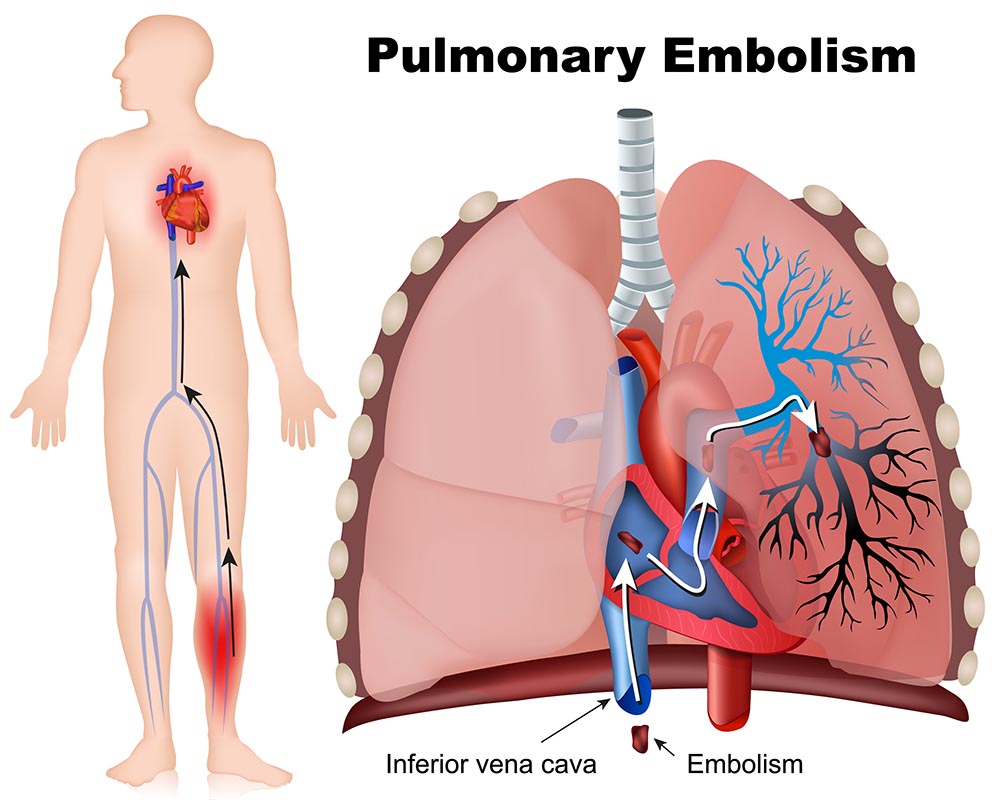
Blood clots that end up causing pulmonary embolism often migrate to the lungs from a deep vein in the legs. This kind of clot is called a deep vein thrombosis (DVT) and develops when blood flow in the legs is severely restricted due to long sedentary periods, such as extended bed rest, long car rides, or a flight.
While they are rare occurrences, arteries in the lungs can also be blocked by air bubbles or tumors. Additionally, fat from the bone marrow can enter the bloodstream when bones break, causing a blockage.
SYMPTOMS OF PULMONARY EMBOLISM
Waste no time in seeking emergency medical attention if you experience any of the following symptoms of pulmonary embolism:
- Chest pain when breathing in deeply
- Coughing up blood from the lungs
- Back pain or profuse sweating
- Rapid heart rate, becoming light headed, or passing out
- Shortness of breath or difficulty breathing
- Nails become blueish in color
RISK FACTORS FOR PULMONARY EMBOLISM
- Being sedentary for long periods of time increases the risk for PE.
- Hypercoagulability — the blood clots easier as a result of certain medications (e.g., oral contraception), smoking, cancer, surgical procedures, or pregnancy.
- Blood vessel damage caused from trauma to the lower leg also increases risk.
DIAGNOSING PULMONARY EMBOLISM
Imaging tests used to help confirm the existence of potentially dangerous blood clots include:
- Computed Tomographic Angiography (CTA)
- Ventilation/perfusion (V/Q) Scan
- Duplex Ultrasound
- Pulmonary Angiography
- MRA
TREATING PULMONARY EMBOLISM
Common ways to treat pulmonary embolism (PE):
- Anticoagulants — used to prevent clots from getting larger, and new ones from forming.
- Thrombolytic medications — introduced via catheter can be used to dissolve large, fresh clots (not preferable, due to higher risk of sudden bleeding).
- Compression stockings – they apply pressure to the legs and help prevent blood from popping or clotting.
- An inferior vena cava (IVC) filter can be used in certain limited circumstances. This cone-shaped device can be used to catch blood clots before they move to the lungs or heart. At Allegheny Vein & Vascular we use retrievable IVC filters that can be removed up to 6 weeks after their initial placement, eliminating the problems associated with most permanent IVC filters.
- Surgery — rarely needed, but an option if a very large or problematic clot must be removed from the lungs.