Varithena
Learn about Varithena™ varicose vein treatment.
WHAT IS VARITHENA™?
WHY IS VARITHENA USED?
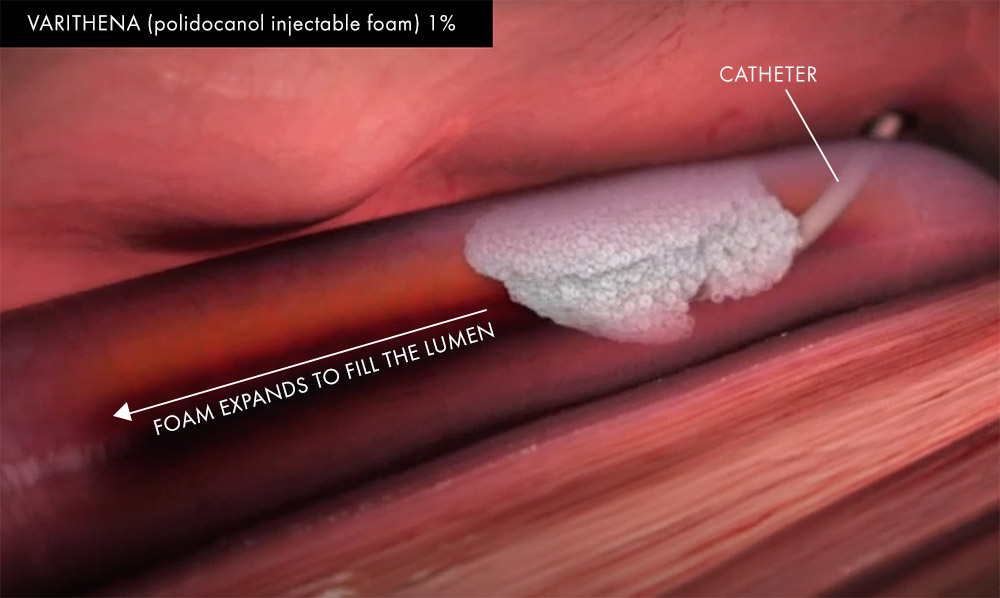
Varithena can be used to treat these malfunctioning superficial veins by injecting a sclerosant microfoam into them. With the non-functional veins sealed closed, blood is able to find other functional pathways up and out of the leg.
Varithena is particular adept at sealing off twisty-turny vessels that a straight catheter may not pass through.
HOW IS THE VARITHENA PROCEDURE PERFORMED?
To ensure patient safety, we perform Varithena as a sterile procedure. After mapping the malfunctioning vein and applying a numbing medication to the small access point, Dr. Tahara uses ultrasound guidance to access the vein. A Venaseal catheter is then inserted into the vein and the tip is carefully positioned using ultrasound imaging to maximize treatment efficacy while minimizing potential complications. Once positioned, small amounts of the Varithena sclerosant medication are injected to evenly fill the vein, displacing the blood it contained and causing it to spasm, collapse and close off. External pressure is applied to the vein and the catheter is removed. At AVV, total treatment time from access to removal of the catheter is usually less than 30 minutes.
At the conclusion of treatment, pressure is then applied to the access site to control bleeding (typically minimal). Compression stockings and ace wrap bandages are used on the leg until the follow up ultrasound is performed within 24-72 hours.
PRIOR TO YOUR PROCEDURE
Dr. Tahara will provide you with detailed instructions about how to prepare for the procedure during your initial evaluation. Dr. Tahara also explores your medical history during pre-op evaluation, including inquiries about recent illnesses, existing medical conditions, and any allergies you have or medications you’re taking. He will carefully explain how you should manage your regular medications, food, and drink just prior to the procedure. As a typical example, you may be told not to eat or drink anything several hours before arrival. You may also be asked to wear loose and comfortable clothing and refrain from wearing jewelry.
WHAT TO EXPECT AFTER YOUR PROCEDURE
IMPORTANT: It is vital that patients keep their followup appointments. The reason for this is that vascular disease is not something that just goes away. It is a process that continues, even after any necessary procedures have been performed. Regular monitoring of your condition will be required in order to help you realize your best possible outcome for the long term.