
Ambulatory Microphlebectomy

Learn about the Ambulatory Microphlebectomy procedure.
What is Ambulatory Microphlebectomy?

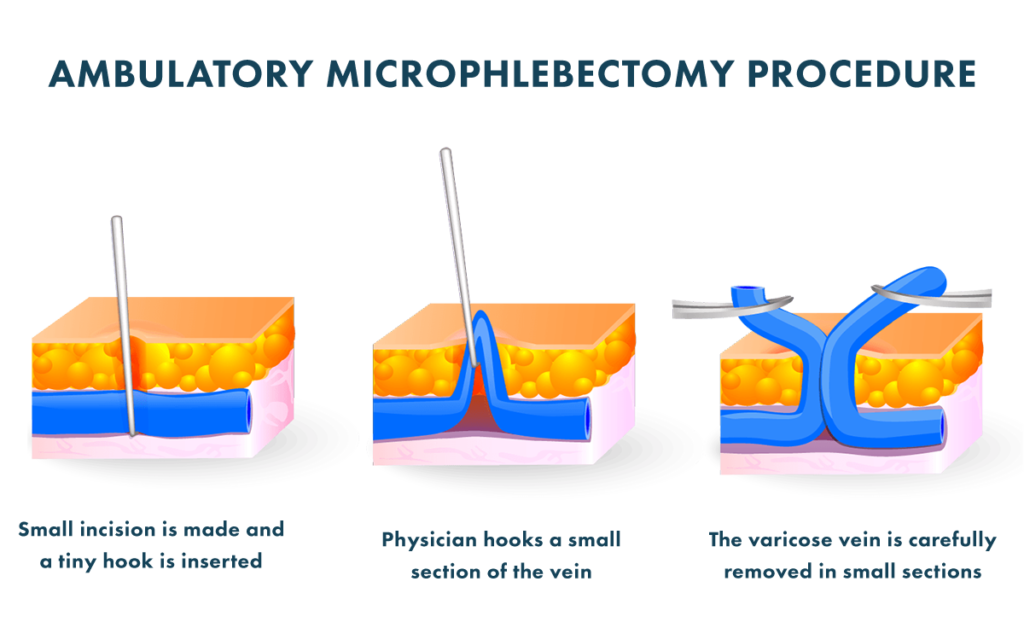
Ambulatory microphlebectomy is a technique in which micro-incisions incisions (less than ¼ inch) are made in the skin in the area overlying the problematic vein. A small hooked tool is then used to grasp and remove parts of the vein in sections. Microphlebectomy should not be confused with vein stripping, which is the surgical removal of a major vein using a vein stripping device.

When is Ambulatory Microphlebectomy used?

Ambulatory Microphlebectomy is considered an option for symptomatic superficial veins that are unsuitable candidates for a catheter-based vein closure modality such as radio frequency ablation or VenaSeal. This includes superficial veins that are deemed too tortuous or chronically thrombosed to use a more minimally invasive approach.

How is Ambulatory Microphlebectomy Performed?

At AVV, we begin this procedure by mapping the problematic vein using ultrasound. Marks are made on the skin surface to provide a “road map” of the underlying vein to be removed. After creating a sterile field, micro-incisions are made along this map and a small hooked tool is used to remove the vein in segments through the incisions. The length of this procedure depends on the length of the vein and how easily the vein can be removed.

PRIOR TO YOUR PROCEDURE

Ambulatory microphlebectomy is an outpatient that typically takes 30 minutes to an hour, depending on the number of veins that must be treated.  Recovery time is minimal and most patients can return to their normal activities immediately. For those patients who experience discomfort, relief is noticeable almost right away.

Dr. Tahara will provide you with detailed instructions about how to prepare for the procedure during your initial evaluation. Dr. Tahara also explores your medical history during pre-op evaluation, including inquiries about recent illnesses, existing medical conditions, and any allergies you have or medications you’re taking. He will carefully explain how you should manage your regular medications, food, and drink just prior to the procedure. As a typical example, you may be told not to eat or drink anything several hours before arrival. You may also be asked to wear loose and comfortable clothing and refrain from wearing jewelry.

WHAT TO EXPECT AFTER YOUR PROCEDURE

The Allegheny Vein and Vascular nursing staff will call you about 24 hours after your procedure to check up on you. Typically, the patient will also come in for a followup visit with Dr. Tahara about a week after the procedure is completed.  From there on out, you will be scheduled for office visits and duplex ultrasound appointments as necessary.

IMPORTANT: It is vital that patients keep their followup appointments.  The reason for this is that vascular disease is not something that just goes away.  It is a process that continues, even after any necessary procedures have been performed.  Regular monitoring of your condition will be required in order to help you realize your best possible outcome for the long term.
ALL THINGS VASCULAR

A great place to learn about all things vascular.

Take time to learn about the vascular system and how it functions.

Learn about venous and arterial vascular conditions that affect the body.

Explore treatments & procedures offered through Allegheny Vein & Vascular.

Learn about the examinations and testing protocols vascular patients receive.