
Non-healing Foot Wound Care
Non-healing foot wounds can be very serious. Learn what to do and not do if you have one.
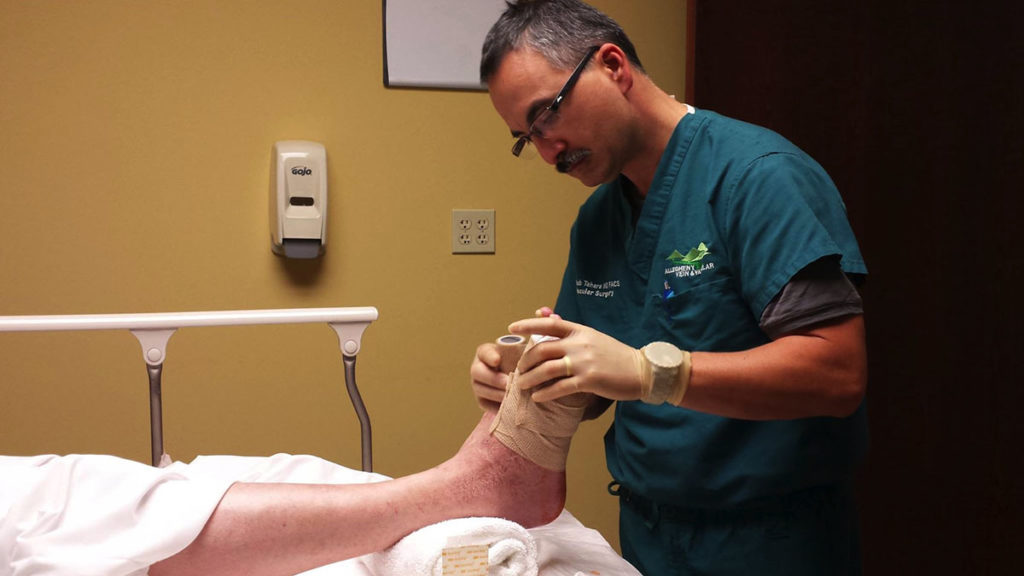
Symptoms of Non-healing foot wounds
One of the greatest symptoms of severe peripheral arterial disease is a non-healing foot wound. These often start out as dark red, brown, or black “spots” under the skin (especially under hard, calloused areas), or as what appears to be a non-traumatic blood-filled blister that opens up and doesn’t heal within a week or two. We implore our patients with arterial issues call us right away if any of these symptoms appear, especially if they haven’t injured themselves.

Non-healing Foot Wounds: Dos and Don’ts
It is EXTREMELY IMPORTANT that you do NOT soak your feet if you have an active foot wound at any stage. Soaking your feet will cause the cells to swell and soften, allowing the possibility of bacteria to access the deeper tissue bed, worsening the wound, causing potential for systemic infection and possibly sepsis, and may result in a speedy amputation of the toe(s), foot, or limb.
While you’re waiting for your appointment, unless you have been otherwise instructed by wound care, your primary care physician or your podiatrist, you can cleanse your wounds with a gentle soap like Dial Gold and a washcloth. Pat the wound dry and cover it by laying a nonstick dressing over the top of the wound. Do not wrap tape, gauze, or any other dressing AROUND the toe or foot. Do not apply any ointments, creams, or lotions unless you have been directed to do so by your physician.
Treatment of Non-healing foot wounds
Sometimes, wounds require debridement — especially diabetic foot wounds. Debridement is simply defined as the removal of damaged tissue. Dr. Tahara performs minor office debridement procedures to clean the wound bed of dead or infected tissue. Depending on how the wound bed behaves, he will occasionally prescribe an enzyme-based debridement ointment to help slow the formation of damaged tissue within the wound bed itself.
Lack of timely treatment could mean big problems
If left untreated, these wounds might ooze bloody, purulent (pus), or foul-smelling discharge. The area of skin around them might appear greyish, whitish, or red with swelling (or all three!). The best thing you can do for a non-healing foot wound or a new diabetic wound is to call us right away. Waiting to notify us of a wound, even if you are seeing another physician, wound clinic, or podiatrist, may result in irreversible vascular complications and unfortunately may require amputation of the affected toe or toes, part of the foot, or the affected limb.
ALL THINGS VASCULAR

Copyright © 2022 - Allegheny Vein & Vascular. All rights reserved.