
Ischemic Rest Pain
Learn about rest pain in the feet.
WHAT IS REST PAIN?
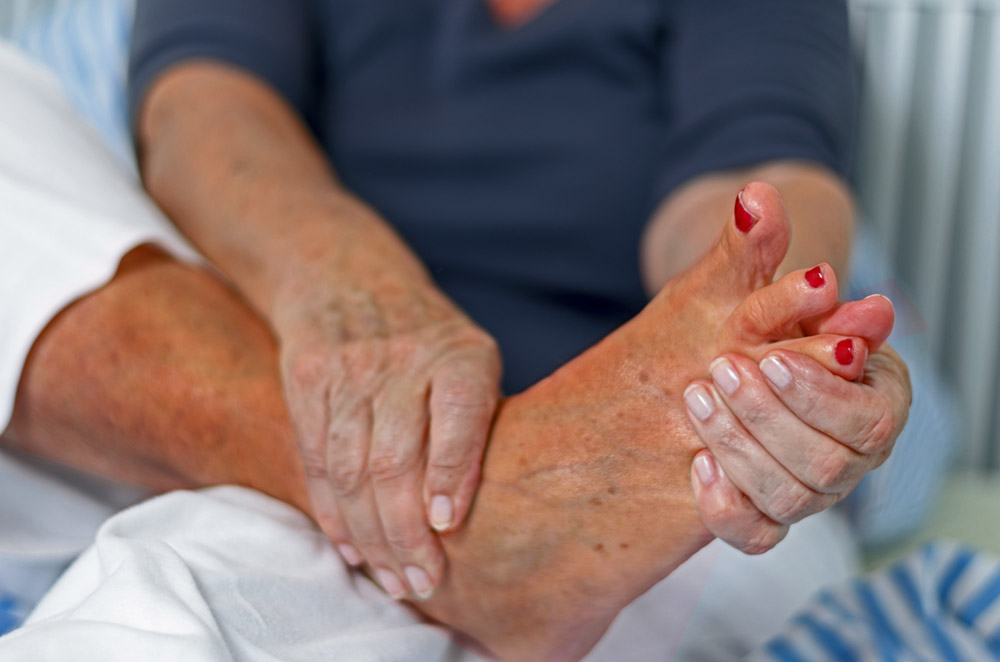
Rest pain is caused by blockages of the main arteries in the lower legs and feet. This causes the foot tissue to be starved of oxygen as blood flow is reduced to a trickle. This is experienced as an intense, unremitting forefoot pain while laying down that partially or wholly subsides when dangling the foot over the edge of the bed, sitting up, or standing up.
Rest pain is one of the more serious manifestations of peripheral artery disease (PAD), where blockages exist inside the arteries that deliver blood to the legs and feet. Patients who have rest pain often describe a pain so intense it causes sleepless nights.
SYMPTOMS OF REST PAIN
Common symptoms associated with rest pain in the feet:
- Unremitting forefoot pain while laying down that goes away when dangling foot over bed
- Foot turns either a bright ruberous red or white and waxy
- Foot is cold to the touch
- Poor capillary refill (ex., when you press on a toe and it turns from red to white, the color returns to red slower than normal)
- Ulcers and open wounds that just won’t heal
- Discoloration in the toes (black toe)
Rest pain is one of the many potential symptoms of PAD and should be taken very seriously. If you experience any of the associated symptoms of rest pain listed above, immediately contact a vascular physician to be professionally evaluated. Failure to get immediate treatment could mean the difference between saving and losing part or all of a foot.
CAUSES AND RISK FACTORS FOR REST PAIN
With rest pain, arterial blockages in the legs and feet cause the tissues to be starved of oxygen as blood flow to the area is reduced. There are a number of known risk factors for pain while resting.
The risk factors for rest pain include both medical conditions and lifestyle factors:
- Smoking — anyone who smokes is at a significantly higher risk for rest pain as smoking inevitably causes arterial damage which can lead to pain and worse.
- Diabetes — diabetics, particularly poorly-controlled diabetics are susceptible to this form of PAD because diabetic pattern disease often affects the small vessels of the feet first.
- Age — individuals over 60 years of age are at increased risk for resting pain due to damaged blood vessels.
- High Cholesterol & High Blood Pressure — people with these medical conditions are at a higher risk of developing PAD.
- Poor Diet / Lack of Exercise — unhealthy foods and inactivity can speed the progression of arterial disease.
DIAGNOSING REST PAIN
A full vascular evaluation will include checking both pulse points on each foot to assess blood flow to the foot. Dr. Tahara will typically order a duplex ultrasound to pinpoint the exact location and severity of the arterial disease. At Allegheny Vein & Vascular, our ultrasound techs are specially trained to evaluate the tiny vessels of the foot. Some physicians may perform an angiogram, which is also an accepted method of rest pain diagnosis. Dr. Tahara prefers to use duplex ultrasound in his arterial evaluations because doing so has many benefits, including zero radiation exposure, zero contrast, is non-invasive in nature, and has a lower cost to the healthcare system. Additionally, duplex ultrasound is highly accurate when performed by specially trained ultrasound technologists, like the ones we have on staff at Allegheny Vein & Vascular.
TREATING REST PAIN
- Medications
- Endovascular treatments
- Arterial Surgeries
- Amputation
ALL THINGS VASCULAR
Copyright © 2022 - Allegheny Vein & Vascular. All rights reserved.