
Thoracic Outlet Syndrome
Learn about causes, risks, and complications related to thoracic outlet syndrome.
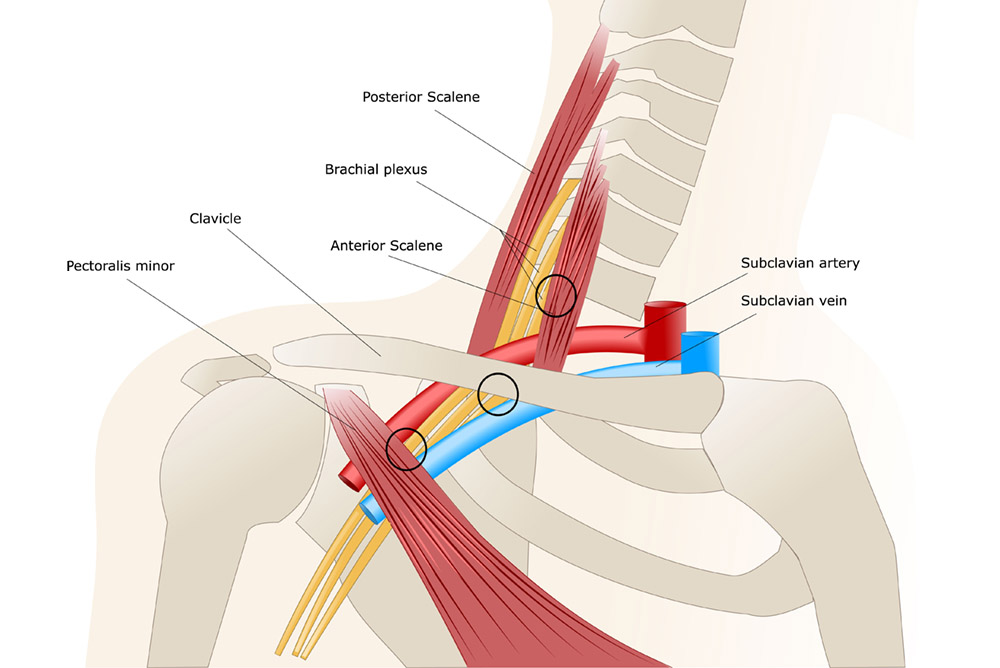
WHAT IS THORACIC OUTLET SYNDROME?
Thoracic Outlet Syndrome (TOS) refers to a group of conditions that develop when certain nerves and/or blood vessels are compressed – specifically, the nerves and blood vessels underneath the clavicle (collarbone). These nerves and blood vessels travel to the arm and may be compressed between the clavicle and the first rib.
There are several types of TOS:
-
- Neurogenic thoracic outlet syndrome – this condition pertains to abnormalities of soft tissue and bone in the lower neck and cervical ribs. Compression in these areas can affect the nerves of the brachial plexus and cause problems with motor and sensory function in the arms and hands.
- Symptoms: hand weakness or numbness; muscle mass in the hand decreases (usually on only one side); pain, tingling, numbness/weakness in the chest, neck, and arms.
- Venous thoracic outlet syndrome – this condition is a result of damage to the major veins in the upper chest and lower neck. It can develop rapidly.
- Symptoms: swelling in arms, hands, and fingers; heaviness or weakness in the arms and neck; dilation or swelling of the anterior chest wall veins.
- Arterial thoracic outlet syndrome – This condition is caused by congenital abnormalities of the bones in the upper chest and lower neck. While it is relatively uncommon, arterial thoracic outlet syndrome is very serious.
- Symptoms: hands and fingers are sensitive to cold; pain, soreness, or numbness in the fingers; poor blood circulation to the arms, hands and fingers.
- Neurogenic thoracic outlet syndrome – this condition pertains to abnormalities of soft tissue and bone in the lower neck and cervical ribs. Compression in these areas can affect the nerves of the brachial plexus and cause problems with motor and sensory function in the arms and hands.
THORACIC OUTLET SYNDROME: CAUSES & RISKS
While the disorders associated with thoracic outlet syndrome are not particularly well understood, it is clear that when the blood vessels and nerves of the thoracic outlet get compressed they can become irritated and cause TOS. Thoracic outlet syndrome can result from anomalies such as an extra first cervical rib, or even a collarbone fracture. Both can reduce space within the thoracic outlet and compress the the vessels and nerves. Hard and soft tissue abnormalities can also cause TOS.
The following may increase the risk of thoracic outlet syndrome development:
- Sleep disorders
- Tumors or enlarged lymph nodes in the upper chest or under the arms
- Depression/stress
- Some sports and physical activities, particularly those where there is repetitive shoulder and arm movement
- Injuries to the back or neck
- Bad posture
- Heavy lifting
DIAGNOSING TOS
Diagnosing thoracic outlet syndrome is typically done by vascular surgeons, thoracic surgeons, or vascular specialists. Additionally, it may be appropriate for some patients to be evaluated by a neurologist to rule out cervical spine disease or other neurological conditions.
There are a handful of exams and tests that can be used to diagnose TOS, including:
- Physical & Neurological Examination
- MRI or CT Scan
- Chest or Cervical Spine X-rays
- Arteriogram
TREATING TOS
Thoracic outlet syndrome cannot be prevented in all cases. However, the condition is treatable. If left untreated, TOS can cause a variety of symptoms and complications such as arm swelling and pain (in the case of patients with venous TOS), ischemic ulcers on the fingers due to restricted blood flow, gangrene, blood clots, pulmonary embolism (obstructed blood vessel from a blood clot), or even permanent nerve damage.
TOS can be treated in the following ways:
- Physical Therapy
- Medication
- Surgery
ALL THINGS VASCULAR

Copyright © 2022 - Allegheny Vein & Vascular. All rights reserved.