
Duplex Ultrasound

Learn about duplex ultrasound, the importance of experienced technicians, and preparing for the procedure.
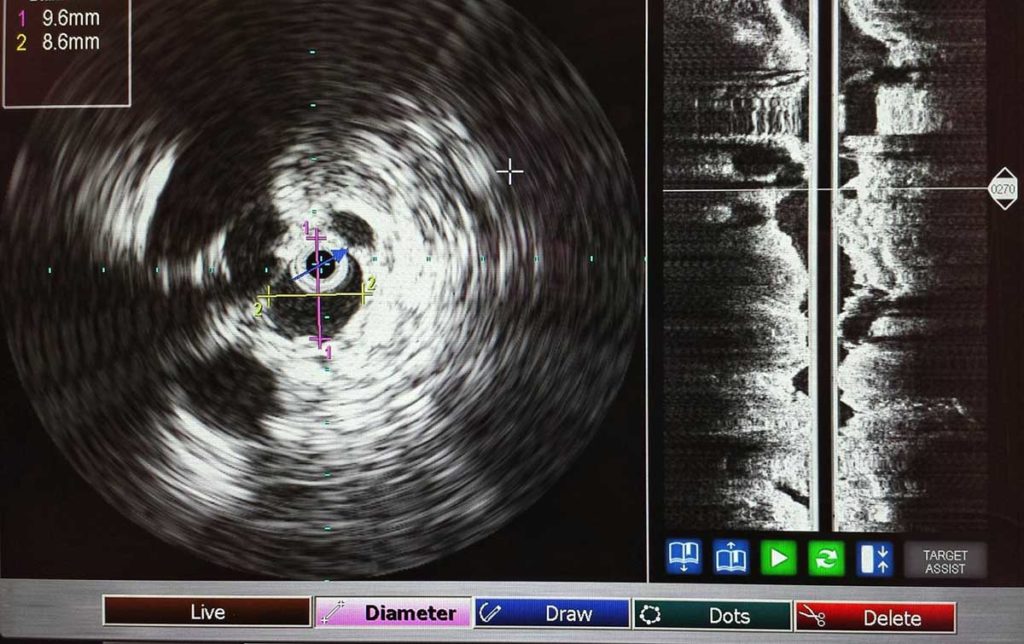
What exactly is a Duplex Ultrasound?

An ultrasound – or sonogram – uses the physics of high frequency sound waves to produce black and white images of the body’s tissue below the skin. A Duplex ultrasound not only produces the black and white images but also adds color flow and pulse wave doppler images. Color flow provides information like blood flow direction and relative velocity as well as how well the blood flow is filling the vessel lumen. Pulse wave doppler uses a scale on an x/y axis to provide a visual representation of blood flow characteristics. This scale shows blood flow direction, exact velocities, and both arterial and venous waveforms, among other things.

Each exam has its own diagnostic criteria which helps physicians determine the location, severity, and even progression over time of both venous and arterial vascular disease processes.

Why Ultrasound?

Basically, ultrasound is a safe, effective, and inexpensive modality. It can effectively provide us with answers to many clinical questions without the use of radiation (unlike CTAs). Additionally, ultrasound costs the healthcare system a fraction of other testing options which may not provide more or better data.

Why Should I have my Vascular Duplex Ultrasound Performed at AVV?

There is actually a VERY good reason for choosing AVV to perform your ultrasound, which is that ultrasound is widely considered a “tech-dependent” modality. This means that the technologist performing your exam has a great impact on the accuracy of your exam, which can be a downside if your technologist lacks experience. True depth of experience, a keen understanding of the anatomy and physiology, as well as painstaking attention to detail are all cornerstone qualities needed to produce a high-quality ultrasound.

For this reason, all three of our full-time ultrasound technologists (plus Dr. Tahara) are Registered Vascular Technologists (RVT), which is a designation which means they have passed the rigorous Vascular Technologist exam administered by the American Registry of Diagnostic Medical Sonographers (ARDMS). With this level of credentialing, rest assured that you will have some of the very best technologists available to you when choosing Allegheny Vein and Vascular for your duplex ultrasound procedures!

NOTE: Only Dr. Tahara provides orders for ultrasounds to be performed in our office-based lab.

What to expect during your test

Our techs will introduce themselves and verify with you what exam is being performed. You will be asked to remove some clothing depending on what exam is being performed, however, you will be provided with a gown and or blanket for cover.

How long will my test take?

Below is the amount of time provided on the schedule for each exam. It is the average amount of time it takes our techs to perform the exam. Your exam may take longer for a number of reasons, including but not limited to: complicated anatomy, patient body habitus or mobility, as well as presence of bowel gas or other factors outside of our control. We ask that you be patient! Our technologists will do their best to stay on-time but they will take extra time to provide all of our patients with the best quality exam.

IMPORTANT: It is vital that patients keep their followup appointments.  The reason for this is that vascular disease is not something that just goes away.  It is a process that continues, even after any necessary procedures have been performed.  Regular monitoring of your condition will be required in order to help you realize your best possible outcome for the long term.

Venous Ultrasounds

  • DVT – 1 hr per leg
  • IVC filter surveillance – 1 hour
  • Lower Extremity Reflux (PreVNUS) 1.25 hour minimum
  • May Thurner Diagnostic or Surveillance – 1 hour
  • Vein mapping for bypass – 1 hour per leg
  • Vein mapping for dialysis access – 1 hour per arm

Arterial Physiologic Exams

  • FloLab – 1 hr

Arterial Ultrasounds

  • Carotid – 1 hour
  • Aorta – 1 hour
  • Renal – 1 hour
  • Lower Extremity Arterial – 1 hour per leg
  • Upper Extremity Arterial – 1 hour per arm

Dialysis Access Ultrasound – 1 hour
ALL THINGS VASCULAR

A great place to learn about all things vascular.

Take time to learn about the vascular system and how it functions.

Learn about venous and arterial vascular conditions that affect the body.

Explore treatments & procedures offered through Allegheny Vein & Vascular.

Learn about the examinations and testing protocols vascular patients receive.