
Carotid Endarterectomy (CEA)
Everything you need to know about Carotid Endarterectomy (CEA).
WHAT IS A CAROTID ENDARTERECTOMY (CEA)?
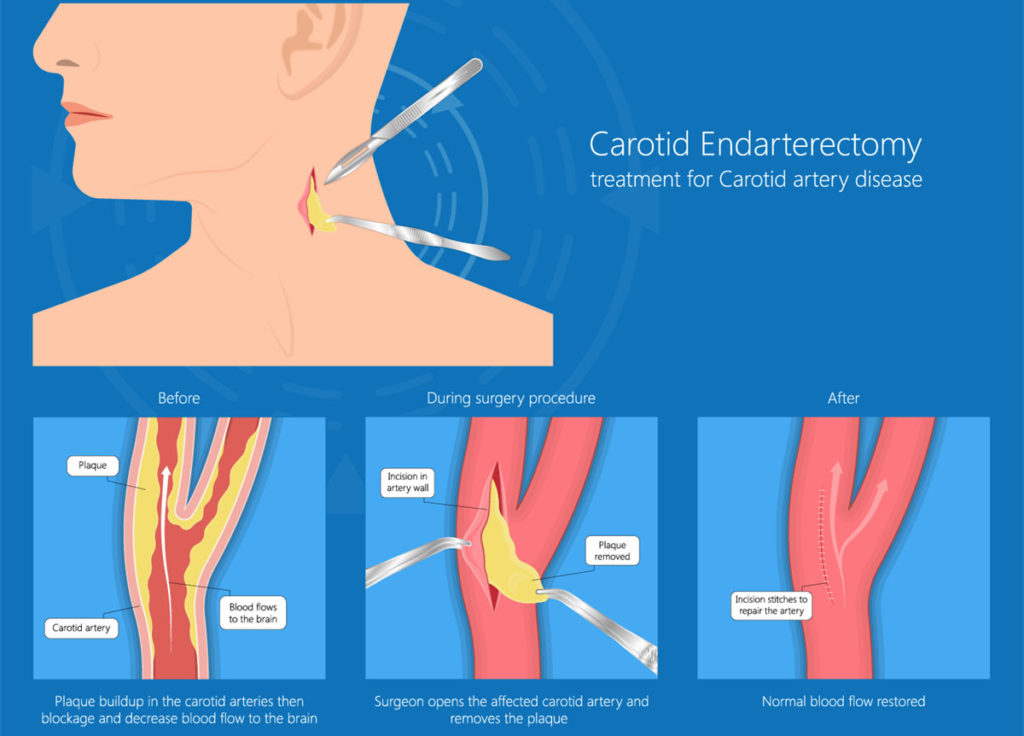
Patients who have carotid artery disease may require the surgical removal of plaque inside the carotid artery (supplies blood to the brain). The procedure to remove the plaque is called a carotid endarterectomy (CEA). Carotid endarterectomy (CEA) is often appropriate for patients who have experienced transient ischemic attacks (TIA) or mild strokes due to advanced carotid artery disease. The major benefit for patients who undergo a carotid endarterectomy procedure is that it helps to prevent the occurrence of future strokes. CEA may also be good option for individuals with severe narrowing or blockage (usually 80% or more) in the carotid artery, but have not yet experienced any symptoms related to carotid artery disease.
Carotid endarterectomy is a very common surgical procedure to treat carotid artery disease.
WHAT YOU NEED TO KNOW PRIOR TO CEA
Carotid endarterectomy is an open surgical procedure performed in a hospital setting and typically requires an overnight stay. If Dr. Tahara recommends CEA for you, he will provide you with detailed instructions about how to prepare for the procedure during your evaluation. Dr. Tahara carefully explores your medical history during pre-op evaluation, including recent illnesses, existing medical conditions, and any allergies you have or medications you’re taking. He will also carefully explain how you should manage your regular medications, food, and drink just prior to the procedure. As a typical example, you may be told not to eat or drink anything several hours before arrival. You may also be asked to wear loose and comfortable clothing and refrain from wearing jewelry.
WHAT TO EXPECT AFTER YOUR PROCEDURE
The Allegheny Vein and Vascular nursing staff will call you about 24 hours after discharge from the hospital. Typically, the patient will also come in for a followup visit with Dr. Tahara about a week after the procedure is completed. From there on out, you will be scheduled for office visits and duplex ultrasound appointments as necessary.
IMPORTANT: It is vital that patients keep their followup appointments. The reason for this is that vascular disease is not something that just goes away. It is a process that continues, even after any necessary procedures have been performed. Regular monitoring of your condition will be required in order to help you realize your best possible outcome for the long term.
ALL THINGS VASCULAR
Copyright © 2022 - Allegheny Vein & Vascular. All rights reserved.