
Coil Embolization

Learn about coil embolization procedures.
What is a Coil Embolization?

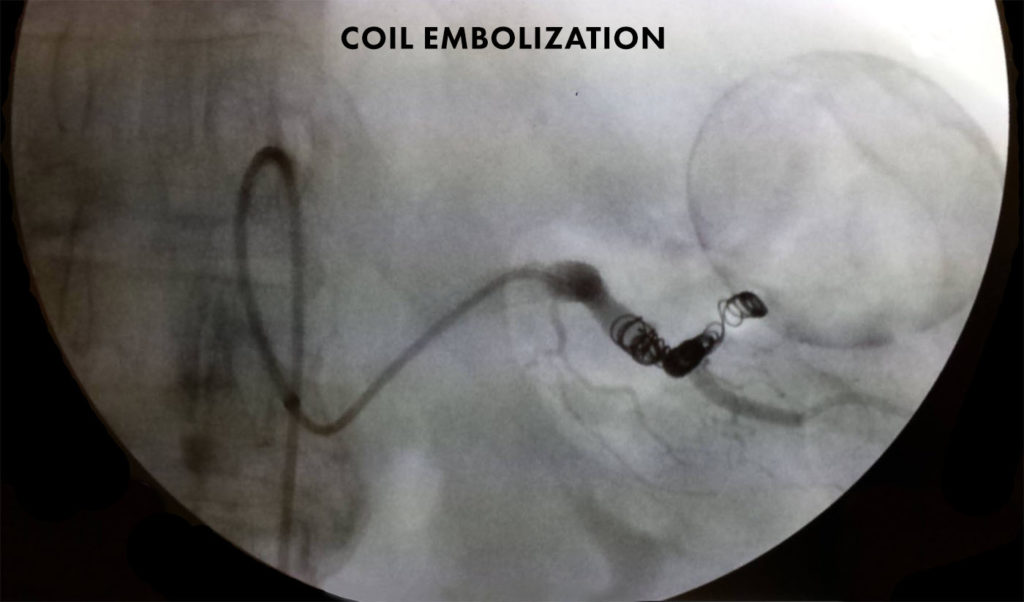
A coil is a small, soft, and flexible piece of metal – typically platinum – that is placed inside a vessel via a catheter delivery device to stop blood flow in the vessel.

Why is Coil Embolization Performed?

Most of a Vascular Surgeon’s procedural time is spent opening up vessels to increase blood flow. However sometimes, as is the case with some abnormal vessel structures like aneurysms or arterial venous malformations (AVM’s – abnormal connections between veins and arteries), blood flow to these areas may actually need to be cut off.

How is a coil embolization performed?

Coil embolization is a sterile endovascular (from inside the blood vessel) procedure. Angiographic imaging is used to guide a catheter to the desired location for precise delivery and release of an embolization coil. Once deployed, the coil will begin to slow blood flow and ideally quickly occlude the vessel. Depending on the size and location of the vessel(s), multiple coils may need to be deployed to achieve complete thrombosis of the target vessel(s). After additional imaging is performed to confirm placement and coverage, the catheter is removed and the access site is controlled.

Not always, but depending on what type of vessel(s) being treated and where, there may be pain experience for a few days after the procedure in the area where the coil cut off blood flow.

The length of the procedure varies widely depending on the location and size of the area being treated.

PRIOR TO YOUR PROCEDURE

Coil embolization is an outpatient procedure we regularly perform at Allegheny Vein and Vascular and usually takes 1 to 2 hours.  The entire treatment — from preparation through treatment and recovery — may take up to 3 hours.

Dr. Tahara will provide you with detailed instructions about how to prepare for the procedure during your initial evaluation. Dr. Tahara also explores your medical history during pre-op evaluation, including inquiries about recent illnesses, existing medical conditions, and any allergies you have or medications you’re taking. He will carefully explain how you should manage your regular medications, food, and drink just prior to the procedure. As a typical example, you may be told not to eat or drink anything several hours before arrival. You may also be asked to wear loose and comfortable clothing and refrain from wearing jewelry.

WHAT TO EXPECT AFTER YOUR PROCEDURE

The Allegheny Vein and Vascular nursing staff will call you about 24 hours after your procedure to check up on you. Typically, the patient will also come in for a followup visit with Dr. Tahara about a week after the procedure is completed.  From there on out, you will be scheduled for office visits and duplex ultrasound appointments as necessary.

IMPORTANT: It is vital that patients keep their followup appointments.  The reason for this is that vascular disease is not something that just goes away.  It is a process that continues, even after any necessary procedures have been performed.  Regular monitoring of your condition will be required in order to help you realize your best possible outcome for the long term.
ALL THINGS VASCULAR

A great place to learn about all things vascular.

Take time to learn about the vascular system and how it functions.

Learn about venous and arterial vascular conditions that affect the body.

Explore treatments & procedures offered through Allegheny Vein & Vascular.

Learn about the examinations and testing protocols vascular patients receive.