Compression Stockings
Learn about compression stockings and how to use them.
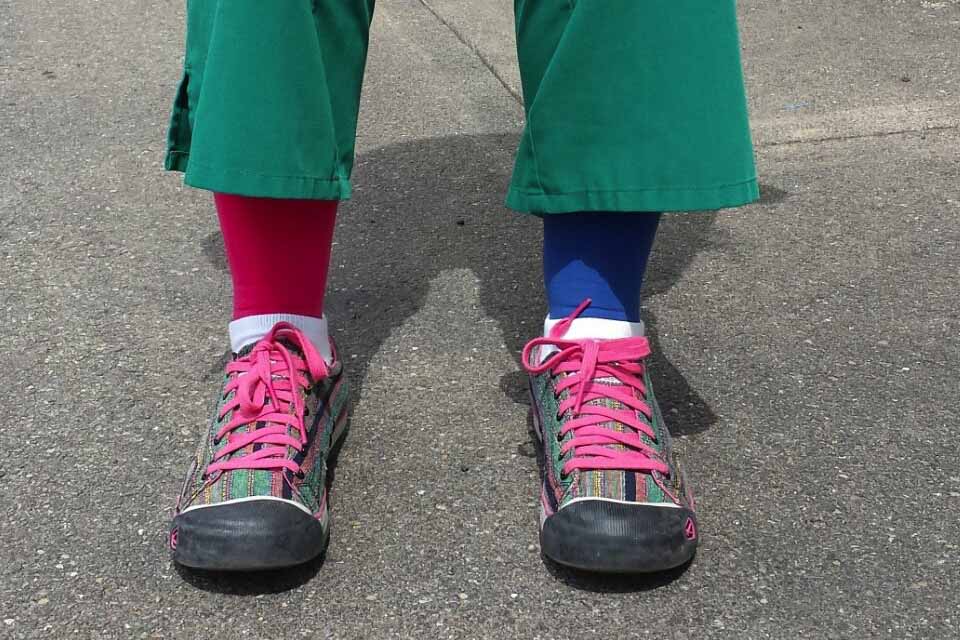
Whoever said compression stockings had to be stodgy and boring??
ABOUT COMPRESSION STOCKINGS

Dr. Bob Tahara wearing his compression hose on an outing to Mt. Rushmore.
Compression stockings — also referred to as compression socks or hose — are a common, non-operative treatment option for patients who need to manage their varicose veins or other vascular condition. Compression stockings are designed to reach up to around knee-level and wearing them properly provides patients about 20-30 mmHg (mmHg = millimeters of mercury) of compression to the legs and feet. Wearing the compression stockings as directed by your vascular surgeon can provide relief from pain, aching, and swelling.
Gravity is always working against your body as it attempts to send blood back to the heart through the venous system. Compression stockings greatly aid in that process by compressing the veins in your legs enough to prevent the pooling of blood in the lower extremities. For many vascular patients, compression stockings will provide just enough pressure on the veins to restore normal, efficient blood flow back to the heart.
NOTE: Please be advised that many insurance carriers require that vascular patients wear compression hose for up to three months before they will authorize coverage for any other vascular treatment options. Dr. Tahara and the staff at Allegheny Vein & Vascular will discuss this in more detail with you if compression stockings are recommended.
FOR WHAT CONDITIONS ARE COMPRESSION STOCKINGS OFTEN APPROPRIATE?
Conditions where compression stockings may be prescribed include, but are not limited to:
- Chronic Venous Insufficiency
- Phlebitis
- Varicose Veins / Spider Veins
- Deep Vein Thrombosis (DVT)
- Lipodermatosclerosis
- Pregnancy
- Edema
- Lymphedema