Femoral Endarterectomy
Everything you need to know about atherectomy procedures.
ABOUT THE FEMORAL ARTERIES
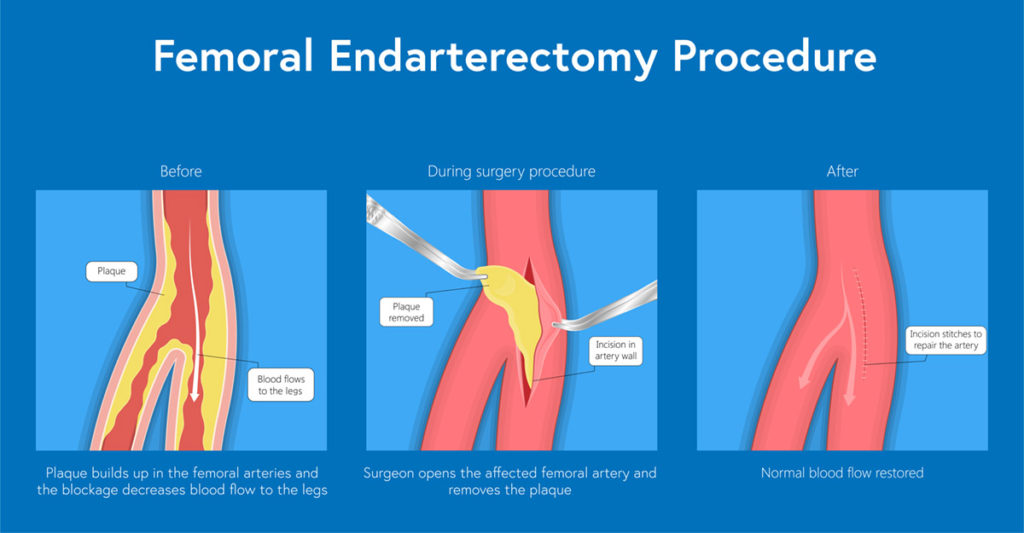
Although all three femoral arteries can have plaque buildup, the common femoral artery is particularly susceptible to the creation of large calcific plaques, which cannot always be successfully treated with endovascular techniques. This is important to understand because a severe stenosis in the CFA limits blood flow to the whole leg – a condition known as Critical Limb Ischemia (CLI). CLI can result in amputation if not properly treated. For this reason, a femoral endarterectomy is a frequently performed procedure.
WHAT IS A FEMORAL EDARTERECTOMY?
Accessing the femoral artery is achieved through an incision at the groin. Once exposed, the femoral artery is clamped on both sides to stop the flow of blood. Dr. Tahara then makes an incision in the artery, removes the plaque formation, and closes the artery.
WHAT YOU NEED TO KNOW PRIOR TO YOUR PROCEDURE
WHAT TO EXPECT AFTER YOUR PROCEDURE
IMPORTANT: It is vital that patients keep their followup appointments. The reason for this is that vascular disease is not something that just goes away. It is a process that continues, even after any necessary procedures have been performed. Regular monitoring of your condition will be required in order to help you realize your best possible outcome for the long term.