IVC Filter Placement / Retrieval
Learn about IVC filter placement and retrieval.
WHAT IS AN IVC FILTER?
IVC filters are designed to be either permanent or retrievable at a later date, and Dr. Tahara will carefully explain which type of filter is most appropriate for your age and condition should you require IVC filter placement.
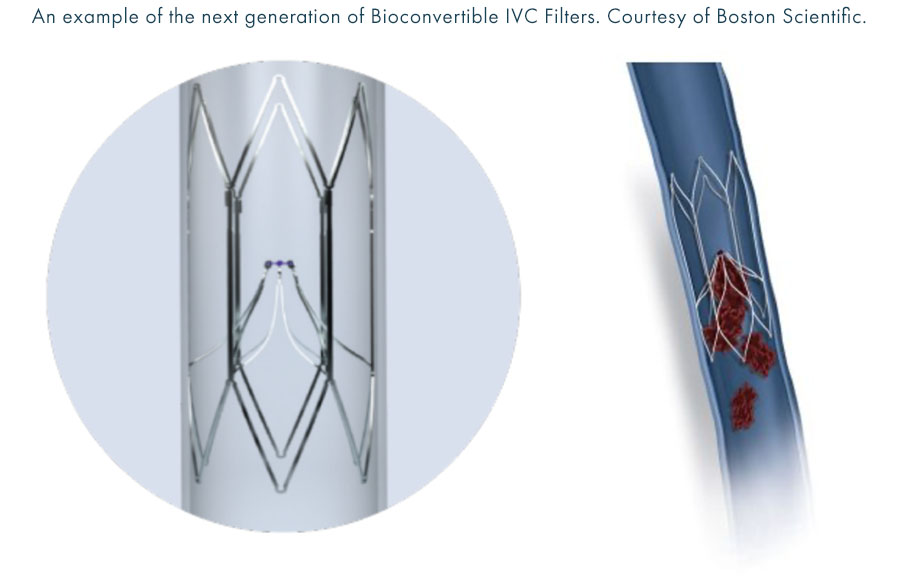
Also important to note is that there are newly emerging technologies in IVC filter design that have made it possible for some patients to conveniently receive next generation bioconvertible IVC filters (meaning that no retrieval procedure will be needed in the future). Allegheny Vein and Vascular is committed to making these next gen devices available to patients who are good recipient candidates.
THE PROS AND CONS OF IVC FILTERS
Some of the main benefits associated with IVC filters are:
- IVC filters can be lifesaving in high risk PE patients
- Nonpermanent (retrievable) filters can be used in patients with transient risk factors
- IVC filters are critically important for patients who cannot be treated with anticoagulants
The risks associated with IVC filters are:
- Increased risk for bleeding and infection
- Significant clot accumulation inside the IVC filter may cause clot formation further down your inferior vena cava (IVC) vein
- IVC filters can tilt, migrate or even fracture over time
- IVC filters can cause vein perforation
WHEN AND FOR WHOM ARE IVC FILTERS PLACED?
Specifically, an IVC filter is placed in patients diagnosed with a pulmonary embolism (PE) and/or a deep vein thrombosis (DVT) who are not able to be treated with blood thinners (anticoagulants). IVC filters may also be placed in patients who will undergo a surgical procedure that increases the risk for DVT or PE.
HOW ARE IVC FILTERS PLACED?
Note: IVC placement is an image-guided procedure where fluoroscopy (real-time x-rays) is most frequently used. However, intravascular ultrasound (IVUS) may also be used in circumstances where contrast cannot be employed.
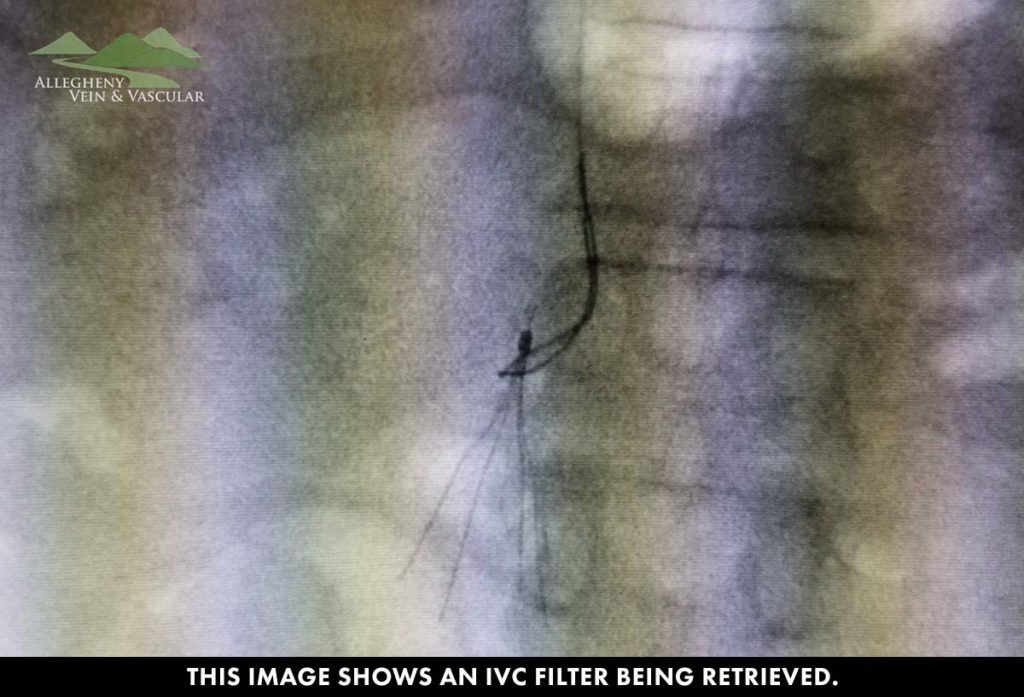
HOW ARE IVC FILTERS RETRIEVED?
PRIOR TO YOUR PROCEDURE
Dr. Tahara will provide you with detailed instructions about how to prepare for the procedure during your initial evaluation. Dr. Tahara also explores your medical history during pre-op evaluation, including inquiries about recent illnesses, existing medical conditions, and any allergies you have or medications you’re taking. He will carefully explain how you should manage your regular medications, food, and drink just prior to the procedure. As a typical example, you may be told not to eat or drink anything several hours before arrival. You may also be asked to wear loose and comfortable clothing and refrain from wearing jewelry.
WHAT TO EXPECT AFTER YOUR PROCEDURE
IMPORTANT: It is vital that patients keep their followup appointments. The reason for this is that vascular disease is not something that just goes away. It is a process that continues, even after any necessary procedures have been performed. Regular monitoring of your condition will be required in order to help you realize your best possible outcome for the long term.