Thrombolysis and Thrombectomy – Venous
Everything you need to know about venous thrombolysis and thrombectomy.
ABOUT THROMBOLYSIS AND THROMBECTOMY
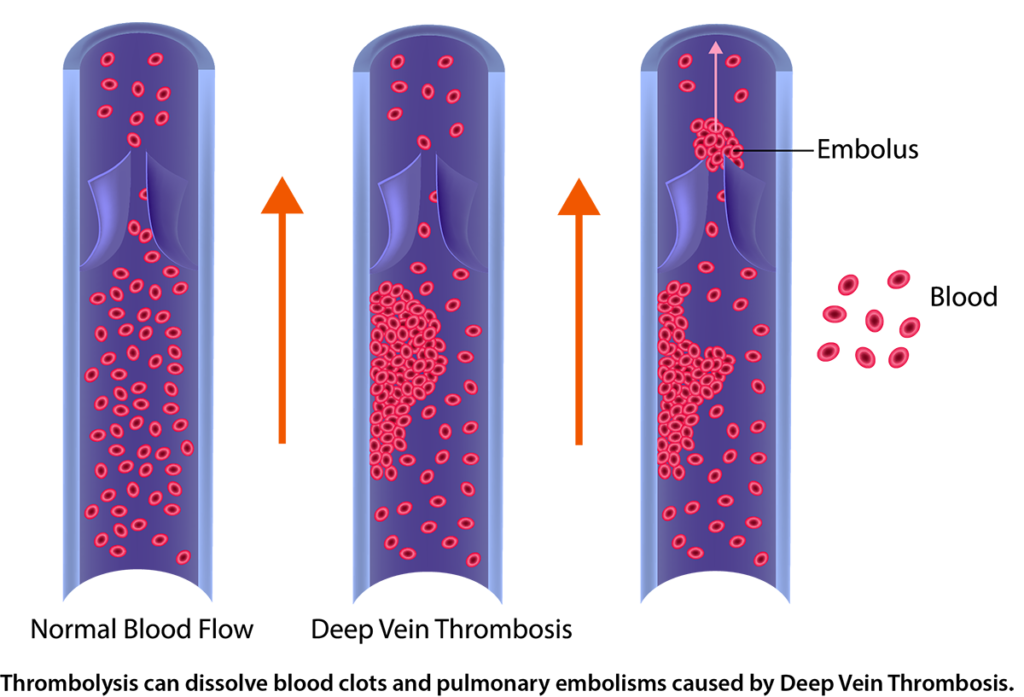
Thrombolysis (also known as thrombolytic therapy) – uses medications to dissolve blood clots in arteries and veins. This is a catheter based procedure.
Thrombectomy – uses various mechanical methods to physically remove or break up blood clots from arteries and veins (rather than dissolve them). This can be either an open surgery or catheter based procedure.
Why are Venous Thrombolysis and Thrombectomy for DVT/PE Used?
Vascular surgeons perform venous thrombolysis and thrombectomy procedures to reduce the risk of damage to organs like the heart and lungs as well as arms and legs. Because of the potential danger that blood clots present and the transformative nature of clots as they age, timely treatment is often critical to the health and well-being of the patient.
It is important to note that not all – or even most – patients with venous blood clots in their legs or arms will require having them dissolved or removed. in fact, many can be managed using medications like Direct Oral AntiCoagulats (DOACs) and/or a IVC filters (preferably the retrievable type). The exception is a Pulmonary Embolism which – depending on its size, placement in the heart or lungs, and impact on health – is more likely to require thrombolysis.
Please note that arteries have their own story – please refer to the page on arterial thrombolysis/thrombectomy for more information.
How is a Venous Thrombolysis and Thrombectomy for DVT/PE Performed?
In some emergency scenarios, open surgery may be required to remove the blockage. Because open surgery thrombectomy involves a larger incision, a longer recovery time can be expected as compared to catheter-based procedures.
WHAT YOU NEED TO KNOW PRIOR TO THROMBOLYSIS/THROMBECTOMY
WHAT TO EXPECT AFTER YOUR PROCEDURE
IMPORTANT: It is vital that patients keep their followup appointments. The reason for this is that vascular disease is not something that just goes away. It is a process that continues, even after any necessary procedures have been performed. Regular monitoring of your condition will be required in order to help you realize your best possible outcome for the long term.